Mass General Brigham's Centers of Expertise (COEs) are innovative cross-specialty educational opportunities that allows trainees to explore areas of medicine and health care delivery relevant to all specialties such as medical education, quality & safety, global & community health, and health care policy & management. This blog is authored by trainees who have participated in the COEs and the impact of this participation.
Thursday, July 15, 2021
A New Lens.
Improving Quality and Value in Healthcare Delivery.
![]() |
| Matthew Joseph Best, M.D. |
COE Healthcare Policy Course Through HBS
A Valuable Perspective.
A Valuable Foundation.
![]() |
| Kelly M. Schuering, MD |
Though my focus has been primarily clinical to date, I know my desire to improve the flawed systems that I see failing patients will inevitably lead to administrative roles in the future. This course has helped prepare me to be a more effective agent in change in building a more efficient, but equitable health care system throughout my medical career as a primary care provider. Though it is just the beginning, this course laid a strong foundation upon which I can hope to build a career and a system that warrants it’s own case in the future! Thanks so much for such a transformative experience!
Friday, July 9, 2021
The Value Proposition of Standardized Care Processes
![]() |
| James C. Etheridge, M.D. |
Necessary for All Residents
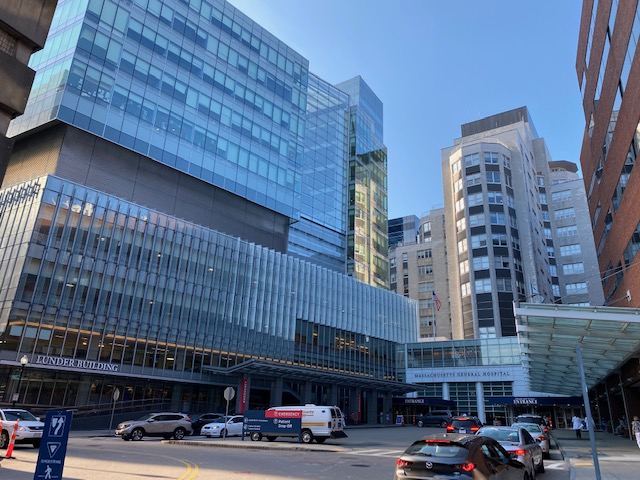
| Massachusetts General Hospital |
Terrific Course for thinking about health system strategy
![]() |
| Gregory James Zahner, MD, MSC |
In my prior experience, most health systems still define value in monetary terms without relation to patient outcomes. Operational measures are considered to the extent that they reflect efficiency and impact the bottom line (e.g., pre-noon discharges, LOS for a given MS-DRG, etc.). Population needs are rarely considered unless to identify a profitable untapped market. While the transition from FFS to capitated and other prospective payment mechanisms is well underway, health systems still focus on high margin services that tend to be procedural, regardless of value to the patient. For example, one health system was under-penetrated in spine surgery (i.e., lower market share in spine relative to their overall market share). From a finance perspective the estimated “loss” was ~$10M in margin annually, but the reason for the under-penetration was a robust PT and PM&R outpatient program that they had established to non-surgically manage many cases. This program reportedly yielded great patient outcomes, but no financial margin.
Additionally, a lot of current healthcare strategy still focuses on “payor mix optimization.” Given the vastly higher rates paid by commercial insurers relative to Medicare and Medicaid, health systems focus on several levers to improve their payor mix. This includes “aligning” physicians with favorable payor mix, improving their ambulatory footprint by building clinics and ambulatory surgery centers in wealthy suburbs, and investing in service lines with the highest proportion of commercial patients. These strategies can make a health system very profitable and are justified for the purposes of cross-subsidizing healthcare for Medicaid patients. However, the focus on competing for commercially insured patients only reinforces many of the healthcare disparities that exist and destroy value at a societal level.
There were several takeaways from this course that will impact my career. 1) You can be wildly successful with non-commercially insured patient populations through customer segmentation and wrap-around services (e.g., Oak Street). 2) Payor-mix optimization doesn’t have to be the end-all of healthcare strategy. Effective deployment of a network strategy that maximizes optimal site-of-care (e.g., CHOP), integrated practice units organized around diseases (e.g., Cleveland Clinic), and patient-centered outcomes (e.g., Martini Klinik) can all be used to improve value in terms of margin as well as patient outcomes while remaining agnostic to payor mix. 3) Bundled payments are an ongoing improvement project. Although early efforts have been underwhelming, a sustainable competitive advantage can be built by being the first in market to perfect bundled payments for an ever-growing range of high-volume services (e.g., New England Baptist).
Learning beyond the patient encounter
![]() |
| Doors to the Emergency Room |
This course reaffirmed my interest in learning more about models that
are efficient, well rounded, and equitable. I am very interested to continue to
learn and apply what I have learned thus far.
I think that more trainees should take this course because as physicians
we are always focused on the art of medicine, but we also have the right and
privilege to engage in the delivery in the care of our patients.
Valuable Lessons in Value-Based Healthcare Delivery
![]() |
| Frances Y. Hu, MD, MSc |
I particularly enjoyed the small group discussions when we were asked to consider the frustrations we encountered as clinical providers across Mass General Brigham and brainstorm solutions to better integrate patient care and increase value within our own healthcare system. Hearing from trainees in a variety of specialties drew attention to opportunities for improvement we had in common and emphasized the benefits to multidisciplinary efforts in improving care delivery. Overall, the course offers a more comprehensive understanding of the contrasting perspectives of various stakeholders in the healthcare system and allows trainees more awareness of strategies to align value with patient care.
Learning to view healthcare in a bigger picture.
Empowering the Next Generation of Healthcare Leaders.
Administrative Fellow
Massachusetts General Hospital
![]() |
| Reading for the Course |
As an Administrative Fellow, I felt empowered leaving this course to seek opportunities to lead TDABC initiatives in future administrative and leadership roles. I am still surprised by the notion that we as a healthcare industry do not comprehensively know our actual costs. I now view healthcare costs and finance in an entirely new lens. Additionally, this class is a great way to step outside of work mode and focus on learning through insightful discussion with colleagues in different corners of our health system. For me personally, this was a great opportunity to connect with young physician careerists, understand each other’s perspectives, and put our minds together to discuss these emerging trends in healthcare. I realized that our clinical and administrative backgrounds have real opportunity to learn from each other, to collaborate, and to passionately drive the future of value-based care. Ultimately, I encourage future clinical and administrative colleagues to take this course, continue to seek learning opportunities, and work together to drive value.
To Improve, It Must Be Measured!
![]() |
| Amar Deshwar, M.D. |
Tuesday, April 6, 2021
Learning how to continue to learn at the Clinical Teaching Skills course.
![]() |
| Nupur Dandawate, MD |
The clinical teaching skills course allowed me to really understand what I knew about teaching, what my preconceived notions about it were and it helped guide me to a place of growth and understanding in this area.
I always imagined myself in some form of a teaching role later in my career, the clinical teaching skills course strengthened this belief as I now feel more confident in my ability to incorporate pockets of teaching within a busy day, give feedback in an effective way and how to, hopefully, drive those I am training to grow themselves.
Amongst the vast majority of expectations from clinicians such as continuously building our clinical knowledge, interpersonal skills with colleagues and patients, academic duties, we often may not have the bandwidth to acquire the skills required to be an effective teacher. Hence, with the clinical teaching skills course I was able to pause and reflect on this. As clinicians we will continue to learn throughout our careers, that being said, being aware of areas we need to work on and taking control is always beneficial and will only help us improve.
From this course, I hope to incorporate what I learned about the psychosocial aspect of giving and receiving Feedback. I really enjoyed our discussions around this topic with Dr Shubha Ramani who was amazing and I would love to spend more time with. I believe that as I hopefully progress in my career, I continue to reflect on what I learnt at the course which is to pause and look at the meaning behind why we incorporate different types of teaching techniques and our skills in giving feedback. I hope to understand my learners better as well as myself as a learner too. There will always be someone superior to us and vice versa, by understanding ourselves first and where our learners and superiors are coming from, we can improve our abilities of creating a harmonious learning environment.
Learning to Teach
![]() |
| Sara Cromer, MD |
Although I have sought teaching
roles for years, this course was the first to provide formal and focused
instruction on adult learning theory and concrete methods of feedback. These
lectures affirmed my own experience, defending teaching methods from which I’ve
benefitted in the past, while also challenging some of my assumptions. These
lectures suggested many ways to improve both the experience of learners and
their likelihood of retaining key lessons which I plan to implement immediately.
Additionally, this class provided
dedicated and focused time to practice both small-group teaching and providing constructive
feedback alongside other learners who are motivated to learn and help others
learn these skills. This very practical application and feedback has already
influenced the way I stage and conduct brief teaching sessions and my ability
to provide timely, actionable, and specific feedback. Thanks for a helpful
course, COE!
Amazing, highly applicable course!
![]() |
| Massachusetts General Hospital |
All this material is presented in a fun and interactive
manner. The course left me with a new perspective towards the approach to
teaching and interaction with trainees while at the same time providing insight
how to maximize my own role as a learner. I am so happy to learn these tools at
this stage in my training and highly recommend this course!
Reflection on the COE teaching course
The COE-CTS teaching course reminded me of the humbling fact that even the best teachers only convey 30% of what the learner needs to know, that learning is an exciting and uncomfortable process, and that so much of what we can do is to encourage the growth mindset that motivates students to continue to approach new challenges with open minds and hearts. I am also now officially on a quest to learn to articulate that elusive 70% of the technical skill that we rarely convey to eager students. Wish me luck!
The Teaching-Learning Toolkit
![]() |
| Boston Skyline |
Learning To Teach
![]() |
| Julia Carlson, MD |
Clinical Teaching Skills course was insightful!
![]() |
| Brigham and Women's Hospital |
I was fortunate to attend the Clinical Teaching Skills course. Although it was given through a Zoom meeting, it was very inspiring to hear the science behind teaching skills and feedback principles. This course opened my eyes toward a different way of approaching these concepts in real life. I am gonna be more open, supportive, engaged and efficient in sharing my knowledge to my future students. It will definitively make a difference in my academic career!